


Materiality Assessment
Sikarin Public Company Limited places great importance on materiality assessment as a critical foundation of its sustainability strategy. This process enables the identification and prioritization of environmental, social, and governance (ESG) issues that impact the company and its stakeholders. By focusing resources on areas that can generate the most positive outcomes, the company ensures effective and efficient progress toward its sustainability goals.

Double Materiality Approach
The company's materiality assessment incorporates a double materiality approach, which involves analyzing sustainability issues from two perspectives

Impact Materiality
Assessing the effects of the company’s operations on external factors such as the environment, society, and the broader economic system.

Financial Materiality
Evaluating the impact of external sustainability-related factors on the company’s financial performance and operational stability.
This dual perspective allows the company to address both the outward impacts of its operations and the risks and opportunities arising from external factors. This approach ensures the development of strategies that align with global sustainability trends and stakeholder expectations.
Materiality Assessment Process
The company’s materiality assessment process adheres to international standards such as the GRI Standards, AA1000 Stakeholder Engagement Standard, and IFRS. It involves the following key steps:


1. Preliminary Research
The company gathers insights from various sources, including market trends, global sustainability developments, stakeholder expectations, and relevant frameworks, to identify critical current and emerging issues.

2. Internal Stakeholder Engagement
Findings from the research are presented to the Board of Directors, the Sustainability Committee, and relevant departments to gather feedback and ensure alignment with the company’s strategic goals.

3. External Stakeholder Engagement
External stakeholders, such as patients, customers, regulators, investors, and communities, are engaged through surveys and discussions to integrate their perspectives into the assessment process.

4. Review and Approval
The final assessment results are reviewed by the Sustainability Committee and submitted to the Board of Directors for approval. This ensures that prioritized issues align with the company’s long-term strategic objectives.
Materiality Matrix
Based on the materiality assessment conducted in line with international standards, Sikarin Public Company Limited has analyzed the materiality matrix as follows
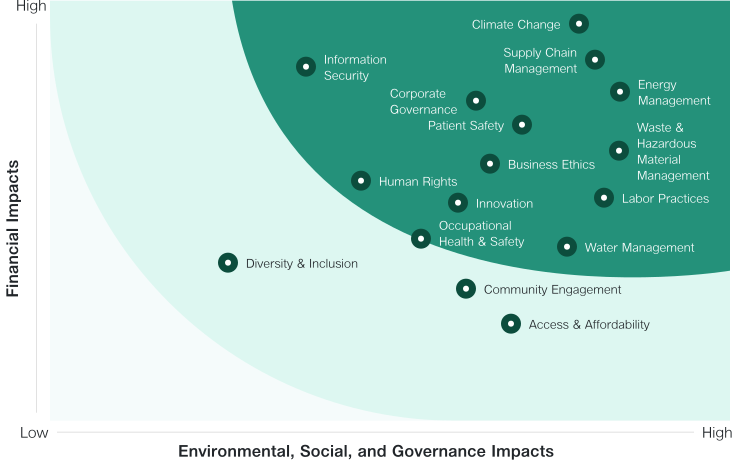
Based on the materiality assessment, Sikarin Public Company Limited has identified the following issues as critical to both its business operations and stakeholders. These issues reflect the significant impact of the company's activities on environmental, social, and governance (ESG) dimensions, as well as the influence of external factors on the organization's financial performance and stability.
 Climate Change
The Company is strengthening its preparedness for climate-related risks while advancing its Net Zero commitment to support continuity of healthcare services and long-term organizational resilience.
 Supply Chain Management
The Company is committed to responsible supply chain management, with emphasis on quality standards, ethics, continuity of critical medical supplies and materials, and risk reduction across the value chain.
 Energy Management
The Company is committed to improving energy efficiency across hospital operations to reduce greenhouse gas emissions, support its climate goals, and strengthen long-term service reliability.
 Waste and Hazardous Materials Management
The Company manages waste and hazardous waste systematically, from segregation at source and safe control of medical waste to data monitoring and compliant disposal processes.
 Corporate Governance
The Company conducts its business under good governance principles by integrating ESG into policy setting, risk management, and performance monitoring to support stable, transparent, and responsible growth.
 Data Security
The Company places strong importance on protecting patient data and critical organizational information through cybersecurity measures, data governance, and ongoing risk monitoring to sustain long-term trust.
 Patient Safety
The Company places patient safety at the center of care delivery through quality systems, medical standards, clinical risk management, and continuous improvement to enhance quality of care and patient confidence.
 Labor Practices
The Company places importance on fair labor practices, employee well-being, capability development, and maintaining a working environment that respects the rights and dignity of its people.
 Business Ethics
The Company is committed to ethical conduct, transparency, and compliance in business operations to strengthen trust, reduce governance-related risks, and support long-term organizational sustainability.
 Human Rights
The Company places importance on respecting human rights and maintaining appropriate labor practices, covering non-discrimination, fair opportunity, the provision of a suitable working environment, and people development in order to promote employee well-being, engagement, and sustainable organizational growth.
 Innovation Management
The Company recognizes innovation management as an important mechanism for enhancing quality of care, patient safety, and access to healthcare services through the application of digital technology, data use with good governance, and capability development of personnel, in order to improve operational efficiency and support long-term organizational development.
 Water Management
The Company promotes efficient water use alongside water and wastewater quality control to support hospital service standards, reduce environmental impacts, and strengthen preparedness for water-related risks.
 Occupational Health and Safety
The Company promotes a safe and healthy workplace through preventive measures, training, and continuous monitoring to reduce work-related risks for personnel.
Advancing Sustainability Through Materiality Assessment
The results of the materiality assessment are integral to shaping the sustainability strategy of Sikarin Public Company Limited. These results guide the company in achieving its organizational goals while meeting stakeholder expectations through the following actions:


Enhancing Risk Management
Identifying and prioritizing material issues helps in proactively managing potential risks, ensuring business resilience, regulatory compliance, and long-term sustainability.

Strategic Planning
Materiality results inform the development of sustainability goals that address the most impactful issues.

Resource Allocation
Investments are directed toward priority areas such as reducing greenhouse gas emissions, enhancing data security, and improving patient care.

Organizational Development
Insights from the assessment are used to improve processes, such as increasing energy efficiency and optimizing waste management.

Performance Measurement
Key performance indicators (KPIs) based on material issues enable effective tracking of progress.

Stakeholder Relationships
Addressing material issues strengthens trust and fosters long-term collaboration with stakeholders.
By integrating materiality assessment results into its sustainability strategy, Sikarin Public Company Limited is committed to driving positive change and building a resilient and sustainable healthcare system for the benefit of society and the environment in the future.
