

Climate Resilience

Goal and Performance Highlights



Supporting the SDGs

Stakeholders Directly Impacted


Commitment and Targets
Sikarin Public Company Limited recognizes that climate change is an issue directly linked to the continuity of healthcare services, the resilience of infrastructure, and the efficiency of the Company’s energy use. In 2025, the Company formally strengthened its climate commitment by declaring its intention to achieve Net Zero GHG Emissions by 2050 and by establishing a medium-term target under its Net Zero Pathway to reduce greenhouse gas emissions by 15% by 2032, compared with the 2025 base year.
The Company has also reviewed and revised its greenhouse gas emissions base year from 2024 to 2025 to ensure that it more accurately reflects the operational boundary, data collection methodology, and the quality of activity data, with greater completeness, consistency, and traceability. This adjustment will support more appropriate and reliable target-setting, progress tracking, and performance comparison in the years ahead.
Challenges and Opportunities
Sikarin Public Company Limited recognizes the impacts of climate change on energy, water, and waste management within hospital operations. Rising patient volumes are driving higher energy demands, while natural disaster risks and increasingly stringent environmental regulations require the Company to adapt and align with sustainability standards. At the same time, Sikarin sees opportunities to integrate renewable energy, eco-friendly technologies, and digital systems to enhance resource efficiency and reduce carbon emissions. Collaborations with public and private sectors are also crucial for developing sustainable initiatives and shaping the future of green hospitals.

Management Approach and Value Creation
The Company has designated climate management as part of its corporate governance and risk management framework by integrating ESG considerations into policy formulation, business planning, and ongoing performance monitoring. At the management level, the Company advances climate management through continuous monitoring and reporting mechanisms under the oversight of the Sustainability Committee, ensuring that environmental performance is aligned with relevant policies, targets, and requirements, while also supporting the continuous development of the Company’s organizational greenhouse gas inventory.

Greenhouse Gas Emission Reduction:
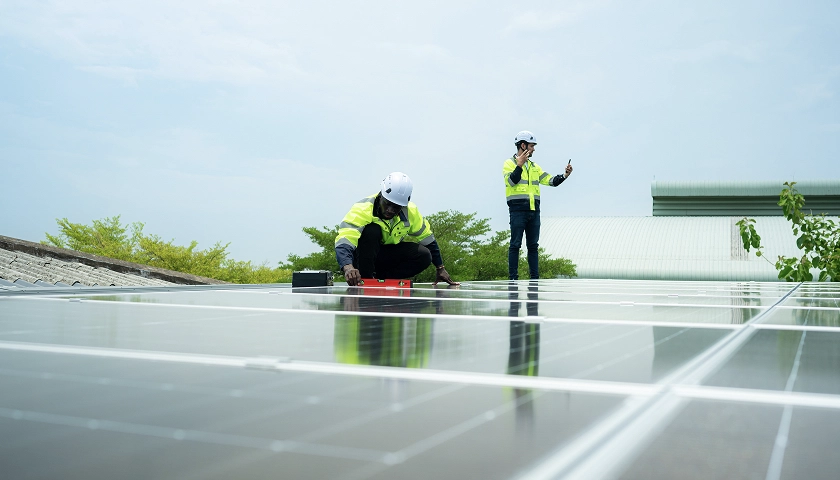
Sikarin has installed solar rooftop systems to reduce reliance on fossil fuels and upgraded HVAC systems and medical equipment for greater energy efficiency.

Efficient Energy and Resource Management:

The Company continually monitors and reports on energy usage. In 2024, total electricity consumption was 16,529,539 kWh, an increase from 2023 due to a higher number of patients. Nevertheless, Sikarin implemented measures to optimize energy use, such as adopting LED lighting systems and deploying smart energy management technologies.

Natural Disaster Risk Mitigation:
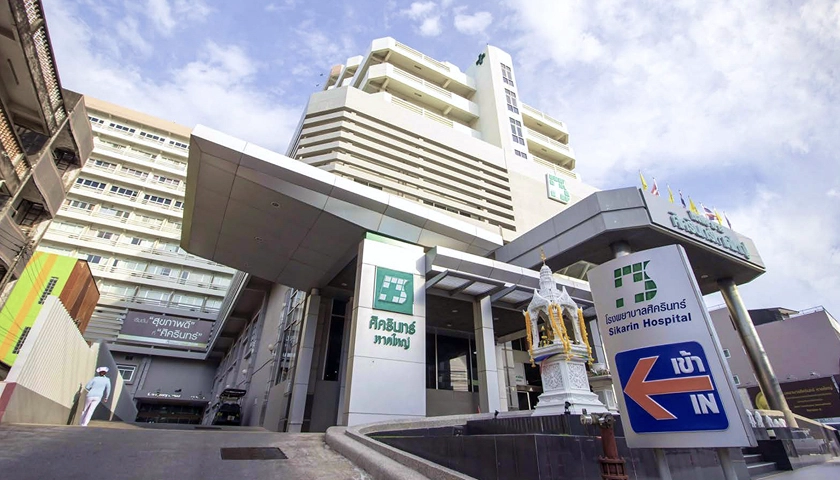
Sikarin has undertaken infrastructure upgrades to mitigate flood risks in critical hospital areas and enhanced its emergency response systems to ensure continuous healthcare services under all circumstances.

Collaboration for Sustainability:

The Company has engaged in external environmental initiatives such as mangrove reforestation projects and the “Low Carbon Run Challenge,” promoting employee and community participation in environmental conservation efforts.

Climate Change Risks and Opportunities:

For the hospital business, climate-related risks are not limited to energy costs, but also encompass both physical risks and transition risks that may directly affect the Company’s operations. Physical risks include severe weather events such as flash floods, heavy rainfall, storms, and disruptions to utility systems, which may affect infrastructure readiness and the continuity of healthcare services. Transition risks include changes in regulations, disclosure standards, and heightened stakeholder expectations. The Company therefore views climate action not merely as carbon reduction, but also as a means of strengthening organizational resilience.
Advancing Toward a Safe and Sustainable Future
Sikarin Public Company Limited plans to expand its renewable energy initiatives by increasing solar panel installations across more hospital buildings and developing energy storage technologies to maximize the use of clean energy. Plans are also underway to promote the use of electric vehicles (EVs) within hospital premises and install EV charging stations, supporting the reduction of fossil fuel consumption. The Company will further advance energy and resource management through smart systems and IoT technologies to enable real-time monitoring and optimization. Sikarin is also strengthening infrastructure resilience against natural disasters and developing a Climate Emergency Response Plan to better manage unforeseen situations. In addition, employee and community engagement will be enhanced through training programs and collaborations with external organizations to drive sustainability projects.
These efforts will support Sikarin’s target to reduce greenhouse gas emissions by 3% by 2030 and build a strong foundation for long-term, sustainable growth.
Our Projects
Sikarin's sustainability program focuses on ESG issues, financial performance, community health, environmental impact reduction, and employee welfare promotion.