


Patient Safety

Goal and Performance Highlights



Supporting the SDGs


Stakeholders Directly Impacted

Commitment and Target
Under the Company’s vision, Sikarin Public Company Limited places the highest priority on patient safety as a key foundation of quality healthcare services and long-term trust creation. The Company is committed to developing medical infrastructure, management systems, technology, and personnel capabilities to ensure that care processes are safe, effective, and aligned with relevant standards.
For the hospital business, patient safety is not limited to reducing medical errors. It covers patient identification, safe medication management, infection prevention and control, communication among care teams, information provision to patients and families, post-treatment follow-up, and service continuity management during emergencies. The Company therefore embeds patient safety into its quality system, risk management, and organizational work culture.
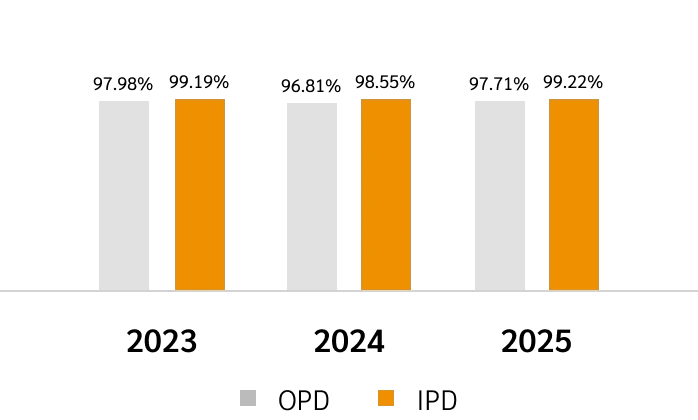
| Overall Satisfaction Score | 2023 | 2024 | 2025 | Target |
|---|---|---|---|---|
| OPD Overall Satisfaction | 97.98% | 96.81% | 97.71% | 98.00% |
| IPD Overall Satisfaction | 99.19% | 98.55% | 99.22% | 98.00% |
Challenges and Opportunities
The current healthcare service system faces multiple challenges, including the complexity of treatment processes, rising patient demands, and technological advancements. Sikarin Public Company Limited recognizes the need to develop patient safety management approaches to reduce medical errors, improve service standards, and enhance the capabilities of healthcare personnel.
At the same time, advancements in digital technologies, such as Electronic Medical Records (EMR) and Artificial Intelligence (AI), allow the Company to improve the quality of care, reduce the chance of errors, and enhance diagnostic accuracy.

Management Approach and Value Creation
The Company manages patient safety by integrating quality systems, treatment standards, risk management, medical technology, and patient participation. The objective is to ensure that risks can be appropriately controlled and traced throughout all stages of service delivery.
This approach creates value in several dimensions, including reducing the likelihood of adverse events, strengthening service user confidence, improving personnel work efficiency, and supporting the hospital’s ability to provide continuous services in an increasingly complex operating environment.

Quality System, Standards, and Learning from Incidents
The Company manages patient safety by referring to international patient safety guidance and relevant healthcare quality standards, such as Joint Commission International (JCI), Hospital Accreditation (HA), and requirements issued by domestic regulatory agencies, to ensure that care processes are aligned with recognized practices.

The Company places importance on incident reporting and learning from events. It applies Root Cause Analysis to understand the factors that lead to errors or adverse events and uses the analysis results to define corrective and preventive measures to prevent recurrence.
This system reflects a safety management approach that focuses on learning rather than punishment and supports personnel in reporting safety-related issues appropriately. Building a culture of reporting and shared learning is an important mechanism that enables continuous improvement of the quality system.

Infection Prevention and Control in Hospitals

Infection prevention and control is one of the core elements of patient safety, as some patient groups are highly vulnerable or face higher risks of complications from infection. The Company therefore establishes appropriate hygiene practices and infection control measures in medical service areas, operating rooms, and high-risk areas.
The approach covers Infection Control practices, the use of protective equipment, communication of work standards to personnel, safe medical waste management, and monitoring of compliance with relevant standards. These measures help reduce risks to patients, personnel, and service users.

Technology to Support Safety and Reduce Errors
The Company uses technology as a tool to support patient safety by improving data accuracy, reducing errors, and supporting clinical decision-making. Electronic Medical Records (EMR) help ensure continuity of treatment information and reduce risks arising from incomplete or inaccurate data.
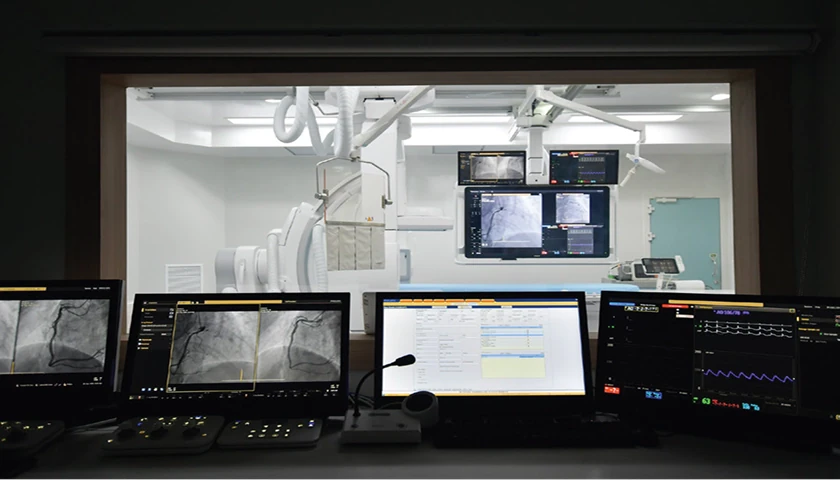
The Company also uses Barcoding Medication Administration (BCMA) to reduce the risk of medication errors by verifying medication and patient information through barcodes before dispensing medication. In addition, Telemedicine and remote patient monitoring help reduce the need for hospital visits where appropriate, reduce unnecessary infection exposure risks, and support continuity in symptom monitoring.
At the same time, the Company places importance on the development of HealthTech, AI, and data analytics to support health monitoring, proactive risk assessment, and timely patient care by medical teams. These technologies serve as tools to support decision-making and service delivery, not to replace the clinical judgment of treating physicians.
Training and Capability Development of Personnel

Patient safety depends on personnel readiness in terms of knowledge, skills, communication, and teamwork. The Company therefore provides ongoing training on Patient Safety and Infection Control for doctors, nurses, medical personnel, and support functions involved in care processes.
Capability development topics cover error prevention, effective communication among care teams and with patients, risk management, quality management fundamentals, and systematic emergency response. In certain contexts, the Company also uses simulation training to familiarize personnel with complex situations and improve accuracy in real-life events.
This type of personnel development helps ensure that patient safety is not merely a policy requirement, but becomes part of the daily skills and work behavior of all personnel groups.

Patient and Family Participation
The Company believes that patient safety cannot be achieved by medical personnel alone, but requires the participation of patients and families in the care process. The Company therefore places importance on communicating necessary information to patients, such as patient identification and treatment information, review of medication lists and allergy history, asking questions when uncertain, following pre- and post-procedure instructions, and self-care guidance after discharge.

The Company has also developed a Patient Feedback System to collect patients’ opinions on treatment quality and service experience, and uses this information to systematically review care processes. Linking patient feedback with cause analysis, responsible parties, and post-improvement follow-up helps ensure that service quality improvements better respond to service user expectations.
Preventive Care and Health Consultation

Beyond treating illness, the Company promotes patient participation in self-care through preventive health guidance, such as nutrition and holistic health consultation through BeBetter Wellness Center, as well as preventive consultation through the Company’s specialized health centers, such as the Heart Institute and Gastrointestinal and Liver Institute.
This approach helps reduce risks of chronic diseases and long-term complications, while supporting service users in managing their own health more continuously.

Risk Management and Service Continuity
To ensure that medical services can continue during emergencies, the Company places importance on its Business Continuity Plan (BCP), which covers risk management approaches for pandemics, natural disasters, or events that may affect healthcare service delivery.

The Company also places importance on managing supply chain risks that may lead to delays or shortages of medical supplies, as well as environmental safety and sanitation issues related to patients, such as appropriate medical waste and hazardous waste management, to reduce impacts on the health of patients and surrounding communities.
