
Compliance and Business Ethics

Goal and Performance Highlights



Supporting the SDGs

Stakeholders Directly Impacted


Commitment and Targets
Sikarin Public Company Limited reaffirms its position in conducting business with integrity, transparency, accountability, and zero tolerance for all forms of corruption or misconduct. The Company has established business ethics, legal compliance, and adherence to professional medical standards as key foundations of organizational management and the provision of medical services. In this regard, the Company places importance on the best interests of patients, the integrity of decision-making processes, confidentiality of information, prevention of conflicts of interest, and fair treatment of all stakeholder groups, in order to build trust among service users, shareholders, employees, business partners, regulators, and society as a whole.
This commitment is translated into practice through clear policies and guidelines, oversight by the Board of Directors and senior management, continuous communication and training, as well as mechanisms that support personnel at all levels in applying ethical principles in their daily work. This includes patient care, procurement, working with business partners, personal data protection, and decisions that may involve conflicts of interest.
Challenges and Opportunities
In today’s rapidly changing business environment, Sikarin Public Company Limited faces numerous challenges in upholding ethical standards in operations. The protection of patients’ personal data is of utmost importance, as any data breach could impact the trust patients place in the organization. In addition, managing potential conflicts of interest between medical professionals and patients presents another critical challenge requiring close attention.
However, these challenges also present opportunities for Sikarin Public Company Limited to enhance its policies and operational processes. The adoption of advanced technologies to protect patient data not only strengthens security but also builds patient confidence. The establishment of clear guidelines on conflict-of-interest management ensures all personnel have a consistent and ethical approach to their responsibilities.

Management Approach and Value Creation
Sikarin Public Company Limited manages business ethics by linking it with its corporate governance structure, risk management, internal control system, and compliance with applicable laws and requirements. This is to ensure that business operations are conducted with integrity, transparency, accountability, and appropriate consideration of all stakeholder groups. The Company has established business ethics and related policies as a framework for directors, executives, employees, and relevant parties in performing their duties. These cover anti-corruption and anti-bribery, prevention of conflicts of interest, personal data protection, confidentiality of patient information, fair treatment of stakeholders, and compliance with professional standards and requirements relevant to the hospital business.
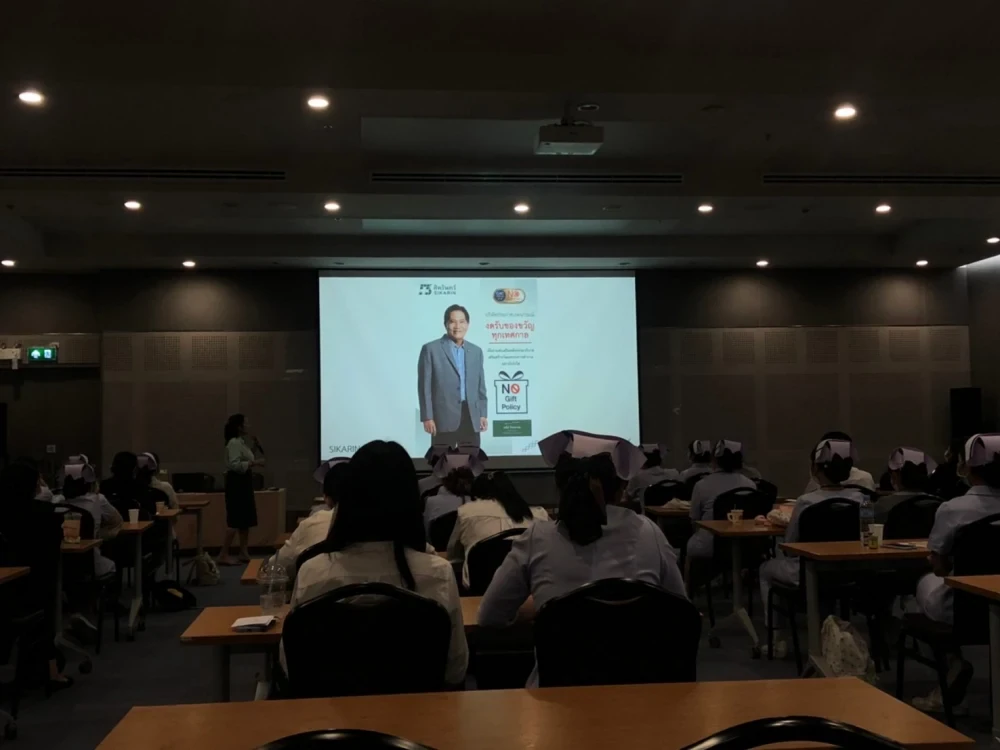
The Company places importance on translating ethical principles into actual practice through continuous communication and training, so that personnel at all levels understand their roles, responsibilities, and appropriate practices according to the nature of their work. In 2025, the Company communicated and provided training on the anti-corruption policy, related processes, and business ethics to directors, employees, and relevant business partners, achieving 100% coverage. This effort helped build knowledge, understanding, and awareness of ethics in work practices, while supporting personnel in making appropriate decisions in situations that may involve ethical risks.
With regard to anti-corruption, the Company upholds the principle of zero tolerance for all forms of corruption, bribery, or improper solicitation of benefits. This applies to internal operations, service provision, procurement, contract execution, engagement of contractors and business partners, sponsorships, donations, and interactions with external organizations. The Company conducts corruption risk assessments and establishes appropriate control measures to systematically prevent, detect, and manage issues that may arise. At the same time, the Company’s continuous renewal of its certification as a member of the Thai Private Sector Collective Action Against Corruption, or CAC, reflects its commitment to developing credible anti-corruption mechanisms that are aligned with nationally recognized practices.
The Company also places importance on preventing and managing conflicts of interest that may arise from work practices or business decisions, particularly in the context of the hospital business, which involves patient care, medical supplies, procurement, service recommendations, data management, and relationships with business partners. The Company therefore aims to ensure that decisions in all processes are transparent, reasonable, verifiable, and do not cause harm to service users, the organization, or relevant stakeholders.
In addition, the Company provides whistleblowing and complaint channels to enable employees, business partners, service users, and stakeholders to appropriately report concerns or conduct that may violate laws, the Code of Conduct, Company policies, or relevant requirements. The Company places importance on receiving reports, investigating facts, maintaining the confidentiality of whistleblowers, protecting whistleblowers from retaliation, and implementing corrective or preventive measures as appropriate. In 2025, the Company found no significant complaints or breaches of the Code of Conduct in issues related to business ethics, corruption, conflicts of interest, regulatory compliance, trade competition, discrimination, human rights, occupational health and safety, and personal data.
These actions help ensure that business ethics become part of the Company’s organizational culture and day-to-day medical service delivery, rather than remaining merely policy requirements. They help reduce legal, reputational, and operational risks, while strengthening long-term trust among service users, employees, business partners, shareholders, regulators, and stakeholders.
Our Projects
Sikarin's sustainability program focuses on ESG issues, financial performance, community health, environmental impact reduction, and employee welfare promotion.